Contents :
Working, growing or playing at heights always involves a degree of risk. Whether you're a climber, a via ferrata operator, a construction worker or a maintenance technician, poor practice or unsuitable equipment can have serious consequences. Yet the majority of accidents at height are due to avoidable human error.
In this article, we take a look at the 5 most frequently encountered mistakes, and the concrete solutions for avoiding them, thanks to a permanent safety approach and the use of continuous safety systems adapted to each activity.
Why safety at height is a major issue
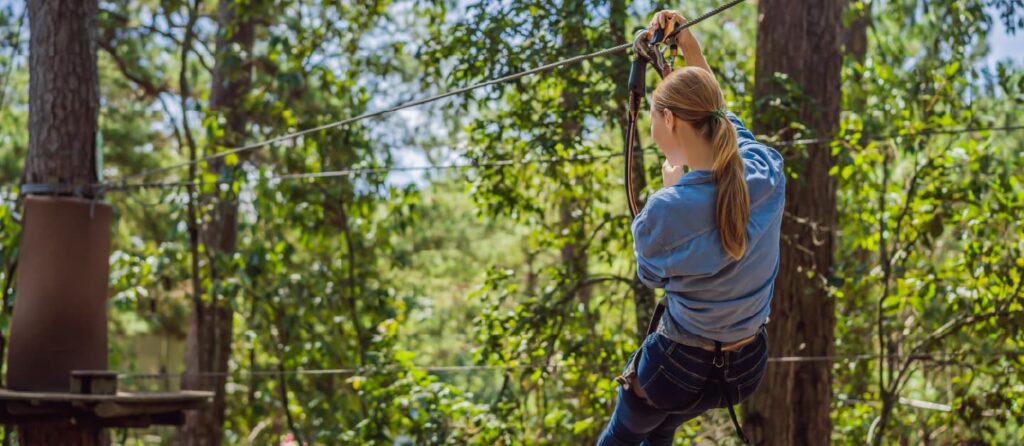
Every year, thousands of accidents at work or at leisure are linked to falls from height. In the construction industry, falls from height are still one of the leading causes of serious accidents. In adventure parks and accrobranche courses, visitor safety is the number one priority, as the slightest incident can tarnish the confidence of participants and the reputation of a site.
Beyond the human aspect, the economic and legal consequences are significant:
- work stoppages,
- legal responsibilities,
- temporary site closures,
- loss of customers.
Prevention is therefore essential. It rests on three pillars:
- Reliable, adapted equipment.
- Rigorous practices (inspection, maintenance, correct use).
- User training and awareness.
But even with these foundations, some recurring errors continue to expose users.
The most common mistakes in height safety
1. No or insufficient inspection
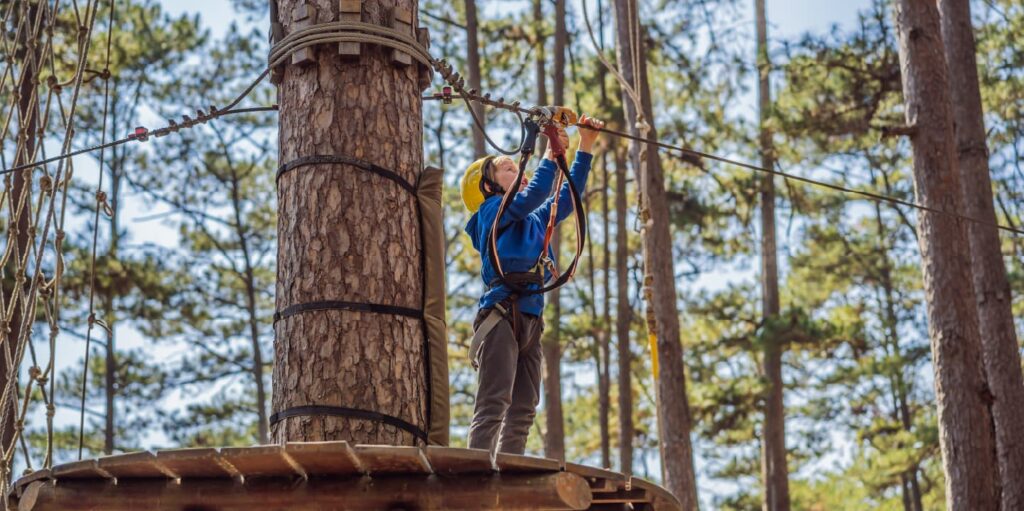
The first mistake is to neglect equipment checks. Regular inspection is the best way to avoid failure. A cracked carabiner, damaged lanyard, worn seam or jammed mechanism can turn into an immediate hazard.
The right thing to do: establish a systematic inspection protocol before each use. It should be quick, visual and tactile, and recorded in a logbook if possible.
2. Use worn-out or unsuitable equipment
Equipment has a limited lifespan. Even if it still seems functional, it may no longer offer sufficient resistance. Another pitfall: using equipment designed for another activity. A system designed for leisure use is not adapted to industrial constraints, and vice versa.
For example, on an adventure course, a simple, conventional lanyard can be accidentally unhooked if the user handles the carabiner incorrectly. That's why many operators now install continuous safety systems that guarantee a continuous lifeline.
3. Incorrect use of safety systems
Even the best system can become ineffective if used in the wrong way. A poorly closed connector, an incorrectly positioned lanyard or a line change made too quickly are typical errors.
Aggravating factor: routine. When gestures become automatic, attention wanes and the probability of error increases.
4. Insufficient or inappropriate training
Many accidents occur because the user has not been properly trained. Knowing the basics isn't enough: you have to know how to react in the event of a problem, understand the limits of the equipment and assimilate the correct gestures.
For climbing park operators, instructor training is essential to guide and reassure customers. In the industry, regular team awareness training is essential.
5. Underestimating fatigue and inattention
Vigilance declines at the end of the day or during repetitive activities. Fatigue, heat, cold or stress can all contribute to a greater number of errors. It's an invisible but formidable cause of accidents at height.
Prevention: introduce break times, rotate teams on different tasks and equip with safety systems designed to compensate for human error.
How to protect yourself? Using CLiC-iT solutions
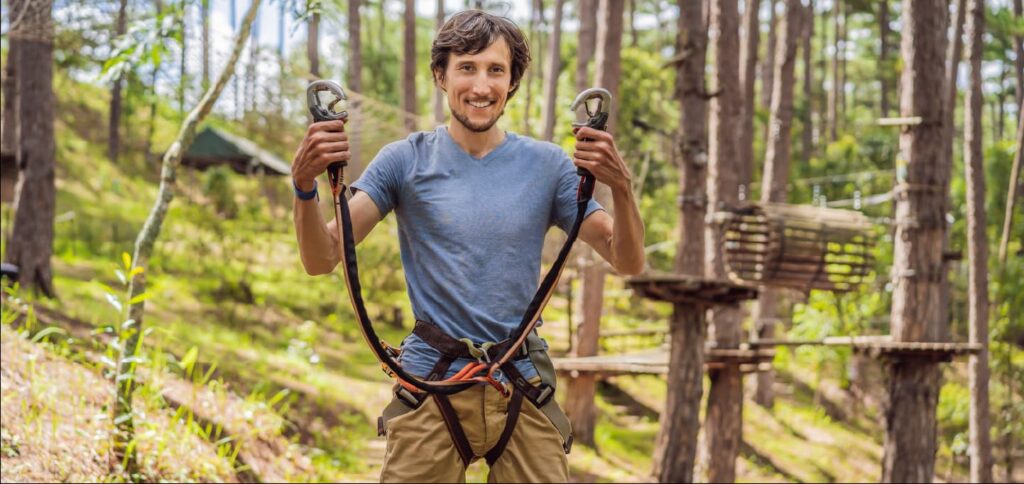
The answer to these common mistakes lies in innovative equipment that guarantees safety at all times. This is precisely the mission of CLiC-iT, the French specialist in global solutions for working at height, combining innovation, safety and simplicity.
Continuous safety systems for permanent protection
CLiC-iT devices feature patented technology: when one connector is opened, the other remains automatically locked. Simultaneous opening is impossible, eliminating the risk of accidental unhooking.
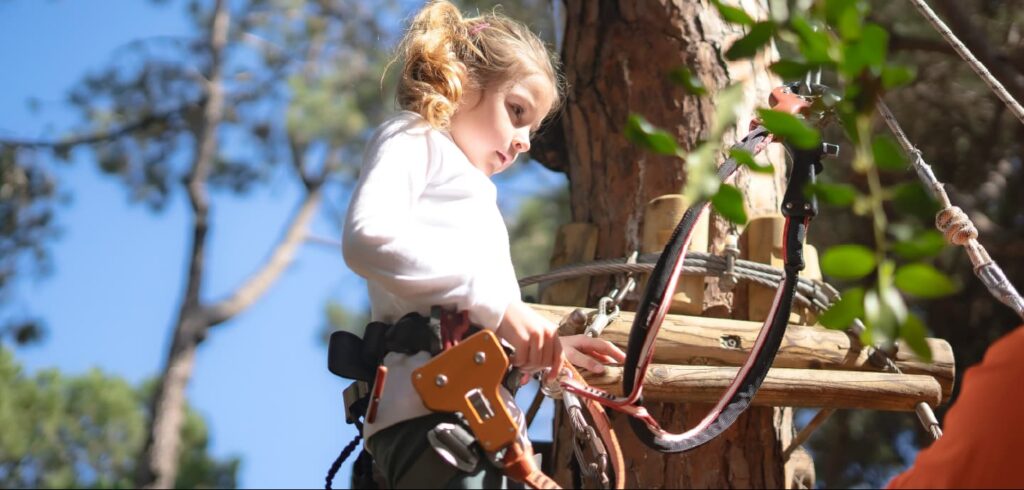
On an accrobranche course, this means that even a distracted or novice user remains safe throughout .
A range for leisure and professional use
- CLiC-iT ADVENTURE CLiC-iT ADVENTURE: designed for adventure parks, accrobranche and leisure facilities. It guarantees visitors continuous safety without reducing freedom of movement. Result: more confidence for customers, less stress for operators.
- CLiC-iT MOUNTAIN The CLiC-iT MOUNTAIN safety system: designed for via Ferrata, it consists of a Y lanyard with an energy absorber. The CLiC-iT MOUNTAIN safety system is also a simple, robust and durable mechanism, thanks to its interchangeable parts and high-quality materials.
- CLiC-iT PRO dedicated to professionals in construction, industry, telecoms and rope access. These systems comply with European standards (EN 354, EN 355, EN 362, etc.) and offer an ergonomic, durable mechanism designed to withstand intensive use.
Sustainability and innovation for prevention
CLiC-iT designs its products in France, paying particular attention to the repairability and longevity of recyclable parts. This approach is both ethical and responsible, while reducing overall costs for operators and companies.
Training and support
CLiC-iT doesn't just supply equipment: the company supports its customers with training in the use and maintenance of its products, as well as technical support. The aim is to ensure optimum use of the equipment and reinforce the prevention culture among users.
To find out more about these innovations and identify the solution best suited to your business, visit Our products.
Conclusion: Preventing accidents with continuous safety systems
Safety at height relies on a balance between human vigilance and reliable equipment. Common mistakes - lack of control, worn equipment, misuse, inadequate training, fatigue - can be avoided with a proactive approach and innovative solutions.
By choosing continuous safety systems developed by CLiC-iT, you can guarantee your teams, employees or visitors permanent safety, with no compromise between comfort, protection and autonomy.
Discover our continuous safety solutions to eliminate these risks.